


High-Yield Agriculture & Agribusiness Content Writing Services
Empowering commercial farm estates, agritech enterprises, development finance syndicates, and export houses with scientifically rigorous agronomic documentation, bankable feasibility studies, and international trade dossiers.

Precision Engineering Across Every Agricultural Pillar
Our content is engineered by agronomists and agricultural economists who understand biological growth curves, capital expenditure realities, and international food trade compliance.
Agritech & Precision Farming Systems Content
Groundbreaking whitepapers bridging sensor-to-cloud IoT architectures, multispectral canopy reflectance metrics (NDVI, NDRE), and automated tractor guidance telemetry.
- Precision Ag Technical Whitepapers & System Architectures
- Satellite & Drone NDVI Imaging Commercial Case Studies
- AI Yield Prediction & Sensor SaaS Product Documentation
- Variable Rate Technology (VRT) Fertilizer Implementation Guides
Bankable Agribusiness Feasibility Studies & Investor Pitch Decks
Watertight, investor-ready dossiers adhering to World Bank agricultural appraisal guidelines, dynamic DCF models, and certified agronomic yield assumptions.
- Commercial Farm 5-Year Comprehensive Feasibility Dossiers
- Bankable Business Plans for Debt & Equity Financing
- Financial Models with DCF, IRR, NPV & Sensitivity Analysis
- Environmental & Social Impact Assessment (ESIA) Summaries
Agro-Processing, Cold Chain & Food Value Chain Protocols
Anchored in FAO post-harvest physiology principles, industrial food engineering standards, and Codex Alimentarius HACCP safety guidelines.
- Processing Facility Standard Operating Procedures (SOPs)
- HACCP, ISO 22000 & Good Manufacturing Practice (GMP) Audit Guides
- Post-Harvest Loss Prevention & Perishability Protocols
- Controlled Atmosphere (CA) Cold Storage Feasibility Reports
Export Commodity Profiles & International Trade Compliance
Aligned with WTO SPS criteria, EU Deforestation Regulation (EUDR) geolocation rules, and international commodity exchange specifications.
- Non-Oil Export Commodity Dossiers (Cashew, Sesame, Cocoa, Ginger)
- Phytosanitary Certification & Quarantine Compliance Manuals
- Incoterms 2020 Contract Structuring & Port Clearance Guides
- Global GAP & EUDR Polygon Traceability Readiness Roadmaps
Regenerative Agriculture, Soil Science & Carbon Credit Whitepapers
Synthesized from IPCC Land Use guidelines, USDA-NRCS soil health rubrics, and microbial rhizosphere ecology peer-reviewed research.
- Soil Organic Carbon (SOC) Sequestration Protocol Guides
- Agroforestry & Cover Cropping Transition Manuals
- Verra & Gold Standard Carbon Offset Methodology Dossiers
- Biochar & Composting Implementation Frameworks
Commercial Livestock, Poultry & Aquaculture Systems Manuals
Engineered upon National Research Council (NRC) animal nutrient requirements and FAO aquaculture technical specifications.
- Broiler & Layer Production Standard Operating Procedures
- Recirculating Aquaculture System (RAS) Engineering & Water Quality Guides
- Feed Formulation & Least-Cost Ration Modeling Reports
- Biosecurity & Veterinary Vaccination Management Frameworks
Visual Field Documentation & Technical Field Proofs
Every agribusiness document is structured with visual operational blueprints, machinery specifications, and post-harvest facility schematics.

Commercial Farm Mechanization
Detailed equipment appraisal, combine harvester efficiency calibration, and machinery depreciation models for large-scale cereal acreage.
Read Mechanization Guides →
Controlled Environment Horticulture
Dutch-drip fertigation formulas, climate control microprocessors, and year-round yield models for high-value export tomatoes and peppers.
Explore Protected Ag →
Agritech & Remote Sensing
NDVI multispectral imagery analysis, variable nitrogen application rubrics, and automated LoRaWAN soil moisture sensor telemetry networks.
Review Agritech Solutions →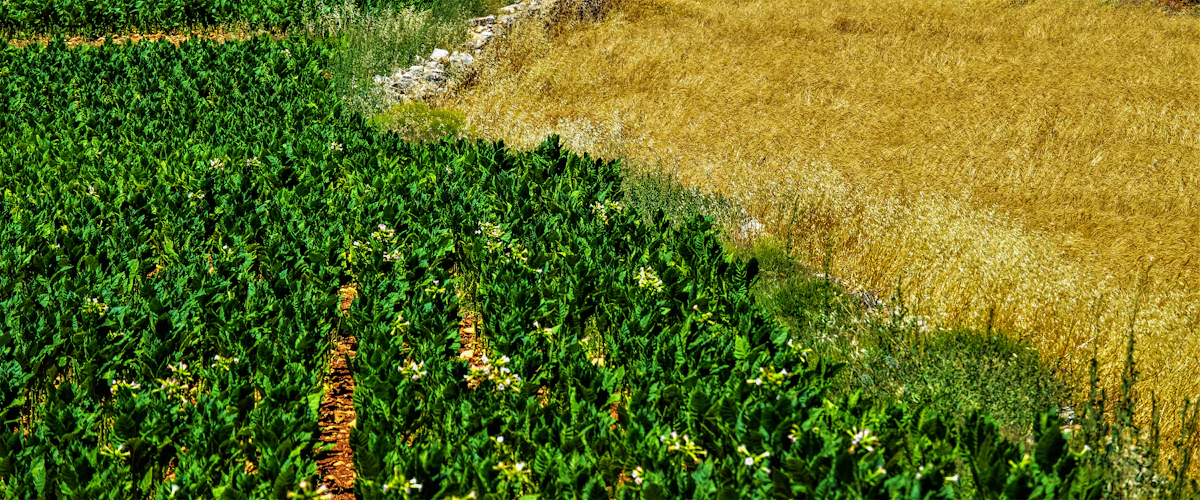
Agro-Industrial Processing
Mass balance calculations, extraction rates, hermetic grain storage silo safety, and industrial flash-drying cassava protocols.
Inspect Processing SOPs →
Livestock & Regenerative Pasture
Rotational paddock management, FCR optimization in feedlots, veterinary quarantine barriers, and least-cost nutrition formulations.
Explore Livestock Manuals →
Export Commodity Aggregation
Grading standards, kernel outturn ratio (KOR) verification, warehouse receipt financing, and international phytosanitary export clearance.
Review Commodity Dossiers →Deep Agronomic Expertise Across Strategic Commodities
From staple cereals to export tree crops, our documents incorporate specific biological gestation periods, yield benchmarks, and realistic market prices.
Oil Palm & Tree Crops
Fresh Fruit Bunch (FFB) extraction rates, refinery fractionation, palm kernel cake valorization, and RSPO sustainability certification documentation.
Grains & Cereals (Rice & Maize)
Hybrid seed selection, laser land leveling, center-pivot irrigation design, combine harvesting loss minimization, and integrated parboiling mill economics.
Cassava & Industrial Roots
High-starch varieties (TMS 419), rapid mechanized harvesting, 24-hour processing window, flash dryers, and glucose syrup refinery documentation.
Commercial Aquaculture
Fingerling grading curves, extruded floating feeds, ammonia biofiltration nitrification loops, smoking kilns, and frozen fillet cold chain distribution.
Export Cashew & Sesame Seeds
Kernel Outturn Ratio testing, jute bag specifications, warehouse receipt systems, phosphine fumigation, and international port clearance documentation.
Protected Horticulture
Indeterminate tomato cultivars, sweet bell peppers, automated fertigation scheduling, integrated pest management (IPM), and packhouse cooling curves.
Grounded in Global Multilateral Agricultural Standards
We cite only official international development banks, research institutes, and sovereign standards bodies. Zero commercial competitors.
Food and Agriculture Organization (FAO)
The premier UN agency providing global agricultural benchmarks, FAOSTAT statistical databases, and food security research.
CGIAR Research Centers
Global research partnership for a food-secure future, advancing drought-tolerant crop genetics and sustainable agro-ecosystems.
International Fund for Agricultural Development (IFAD)
International financial institution dedicated to investing in smallholder rural transformation and agricultural market linkages.
World Bank Agriculture & Food Global Practice
Leading provider of institutional agricultural investment dossiers, climate-smart agriculture guidelines, and economic sector reviews.
African Development Bank (AfDB) – Feed Africa
Pioneers of Special Agro-Industrial Processing Zones (SAPZ) and major financing initiatives across African agricultural value chains.
International Institute of Tropical Agriculture (IITA)
World-renowned agronomic institute specializing in cassava, yam, maize, soybean, and banana breeding with bio-control breakthroughs.
USDA Economic Research Service (ERS)
Gold-standard economic research service delivering global grain, oilseed, and livestock commodity forecasts and baseline projections.
Global GAP Certification Standard
Internationally recognized farm assurance and certification standard for good agricultural practices, food safety, and worker welfare.
Alliance for a Green Revolution in Africa (AGRA)
Pan-African institution catalyzing private-sector input supply chains, fertilizer policies, and smallholder farmer resilience.
PrecisionAg & Digital Agriculture Alliance
Technical industry platform tracking autonomous guidance systems, variable-rate fertilizer applicators, and agronomic remote sensing.
Comprehensive Agribusiness & Agricultural Documentation Directory
Explore our specialized writing services covering every stage of the commercial agricultural lifecycle.
Institutional Agribusiness Inquiries Answered
Clear, direct answers regarding methodology, bank readiness, agritech capabilities, and project turnaround.
Accelerate Your Commercial Agribusiness Scale
Whether you require a multi-million-dollar bankable farm feasibility study, an agritech hardware whitepaper, or a non-oil export commodity profile, our agricultural specialists deliver uncompromising technical depth.

